Choosing the Perfect Kitchen Sink: A Comprehensive Guide

In this article
- Introduction
- Sink Materials: Finding the Perfect Balance of Form and Function
- Sink Styles: Marrying Form with Function
- Size and Configuration: Finding the Perfect Fit
- Installation Types: Choosing the Right Fit for Your Kitchen
- Additional Features: Enhancing Your Sink's Functionality
- Faucet Considerations: The Perfect Pairing for Your Sink
- Maintenance and Care: Keeping Your Sink in Top Condition
- Budgeting for Your Kitchen Sink: Balancing Cost and Quality
- Conclusion: Making Your Perfect Sink Selection
At ABC Home Expert, we know that a kitchen sink is crucial for your daily workflow. For over 20 years, we've helped homeowners transform their kitchens with the perfect sink choice. This guide will help you select a sink that combines both functionality and style.
Introduction
Choosing the right kitchen sink is an important decision that will affect your daily routine for years. Let's explore all the key factors - from materials and styles to sizes and installation options - to help you make the best choice.
Sink Materials: Finding the Perfect Balance of Form and Function
The material of your kitchen sink plays a crucial role in its durability, maintenance requirements, and overall appearance. Let's explore the pros and cons of popular sink materials to help you make an informed decision:
Stainless steel sinks: The Timeless Classic
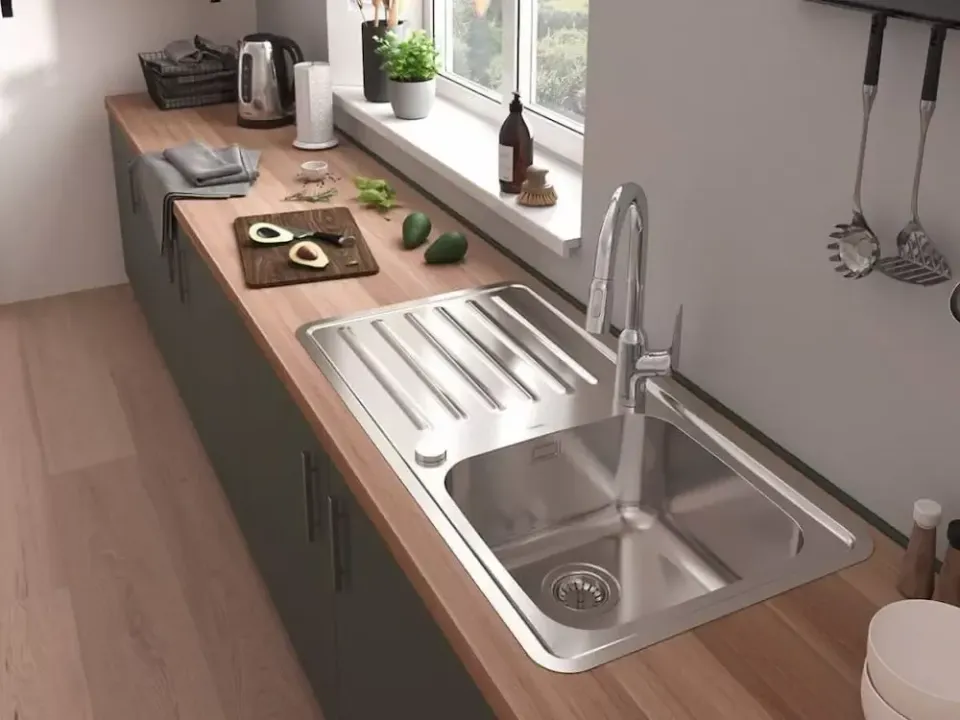
Stainless steel sinks remain a popular choice for good reason. They offer a sleek, modern look that complements various kitchen styles.
Pros:
- Extremely durable and resistant to heat and stains
- Easy to clean and maintain
- Affordable options available for various budgets
- Lightweight, making installation easier
Cons:
- Can be noisy, although higher-gauge steel and sound-absorbing pads can mitigate this
- May show water spots and scratches more easily than other materials
- Limited color options
Granite Composite: Durability Meets Style
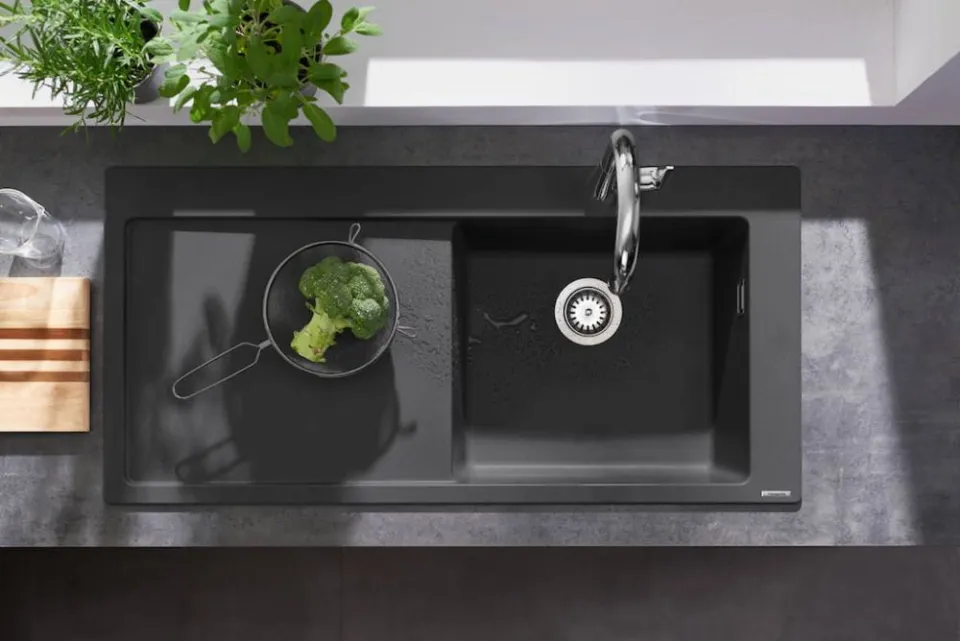
Granite composite sinks blend granite dust with acrylic resins. This combination creates a durable and attractive sink material.
Pros:
- Extremely resistant to scratches, chips, and stains
- Available in a wide range of colors to match any kitchen decor
- Heat resistant up to 535°F (280°C)
- Non-porous surface inhibits bacterial growth
Cons:
- Can be more expensive than stainless steel options
- Heavier than stainless steel, potentially requiring additional support
- May require special cleaning products to maintain its appearance
Porcelain: Timeless Elegance
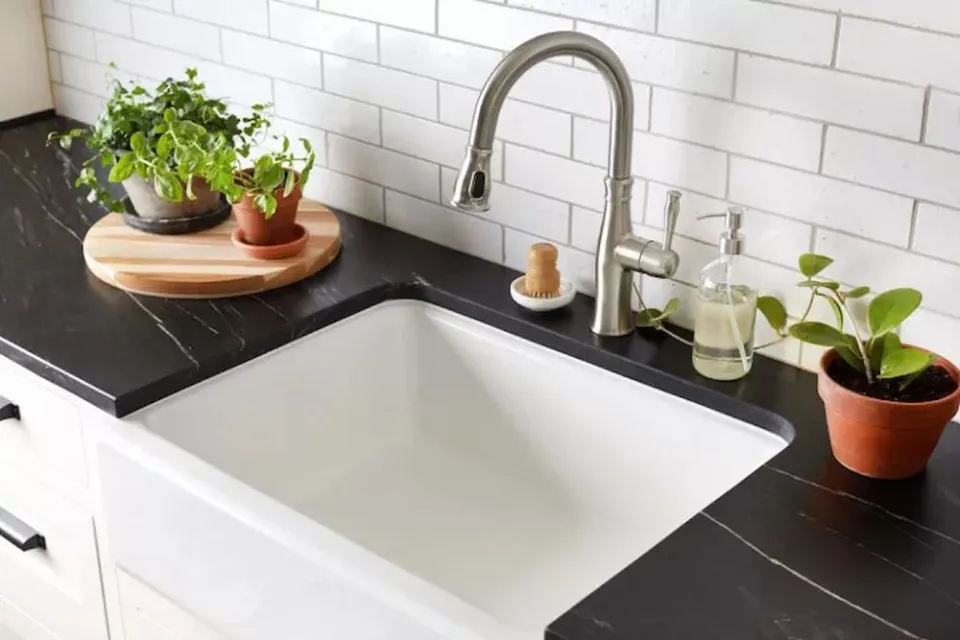
Porcelain sinks, also known as vitreous china, offer a classic look that never goes out of style.
Pros:
- Available in a wide array of colors and designs
- Smooth, non-porous surface that's easy to clean
- Resistant to stains and chemicals
- Can withstand high temperatures
Cons:
- Can chip or crack if heavy objects are dropped on it
- May develop visible scratches over time
- Heavier than stainless steel, requiring sturdy support
Cast Iron: Built to Last
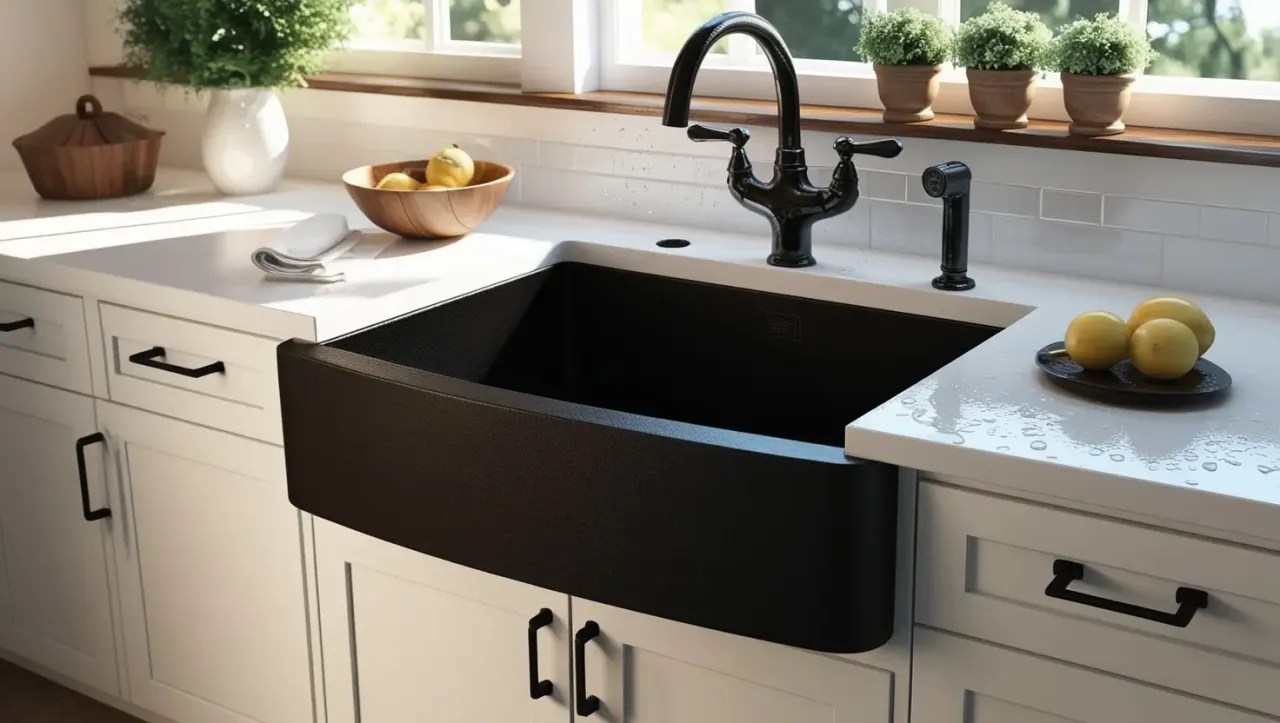
Cast iron sinks coated with enamel offer unparalleled durability and a premium feel.
Pros:
- Extremely durable and long-lasting
- Available in a variety of colors thanks to the enamel coating
- Excellent at retaining water temperature
- Noise-dampening properties
Cons:
- Very heavy, often requiring additional support and professional installation
- Enamel can chip if subjected to hard impacts
- Generally more expensive than other options
Copper: Unique and Luxurious
Copper sinks offer a stunning, unique appearance that can serve as a focal point in your kitchen.
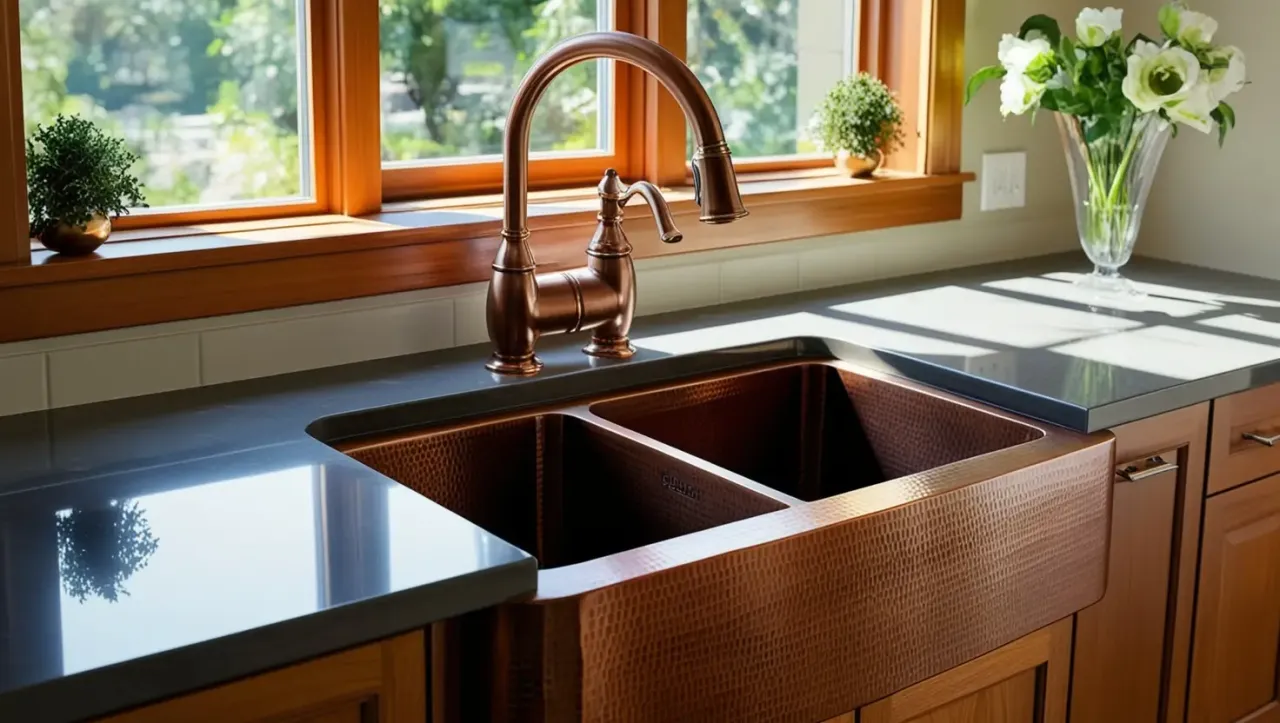
Pros:
- Natural antimicrobial properties
- Develops a beautiful patina over time
- Each sink is unique due to natural variations
- Durable and long-lasting
Cons:
- Requires special care to maintain its appearance
- Can be sensitive to acidic substances
- Generally more expensive than traditional materials
- Patina development may not be desirable for all homeowners
Sink Styles: Marrying Form with Function
The style of your kitchen sink not only affects its appearance but also its functionality. Let's explore various sink styles to help you find the perfect match for your needs and kitchen design:
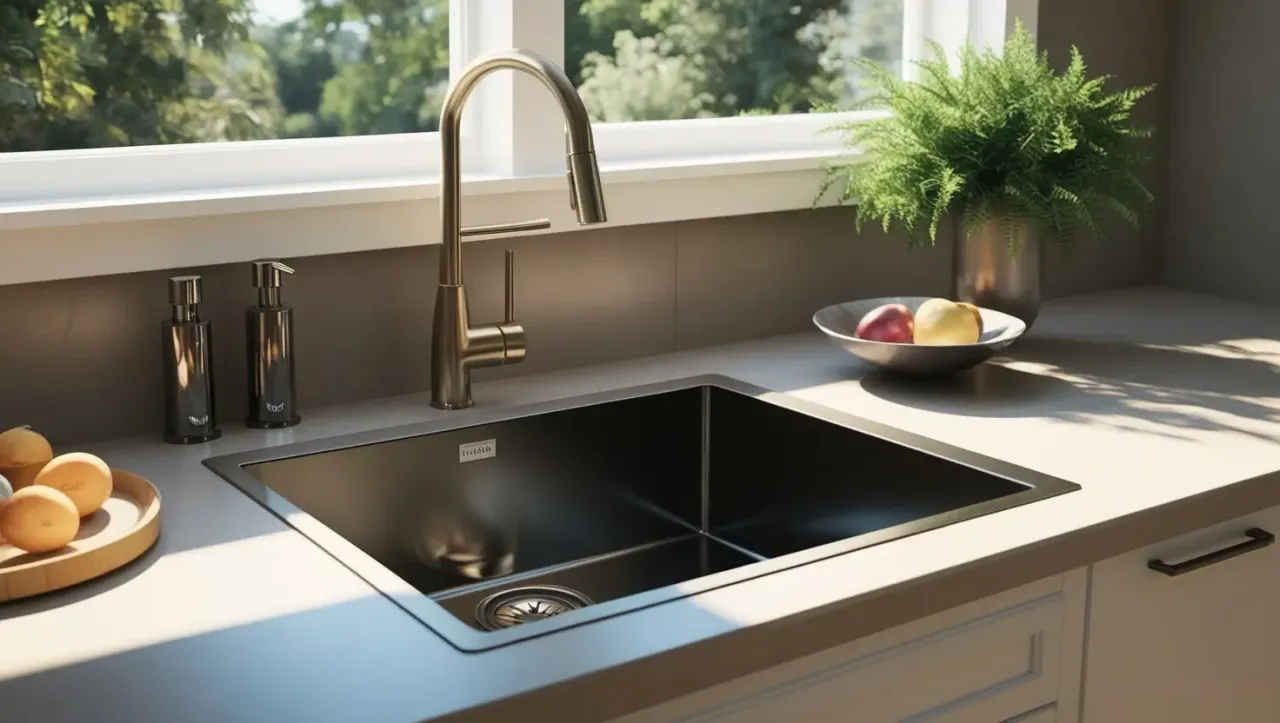
Single Bowl: Simplicity and Versatility
Single bowl sinks offer a spacious washing area, ideal for handling large pots and pans.
Pros:
- Provides maximum space for washing large items
- Simple, clean look that suits modern kitchens
- Often more affordable than multi-bowl options
Cons:
- Less versatile for multitasking (e.g., washing and rinsing simultaneously)
- May not be ideal for households that prefer to separate tasks
Double Bowl: The Multitasker's Dream
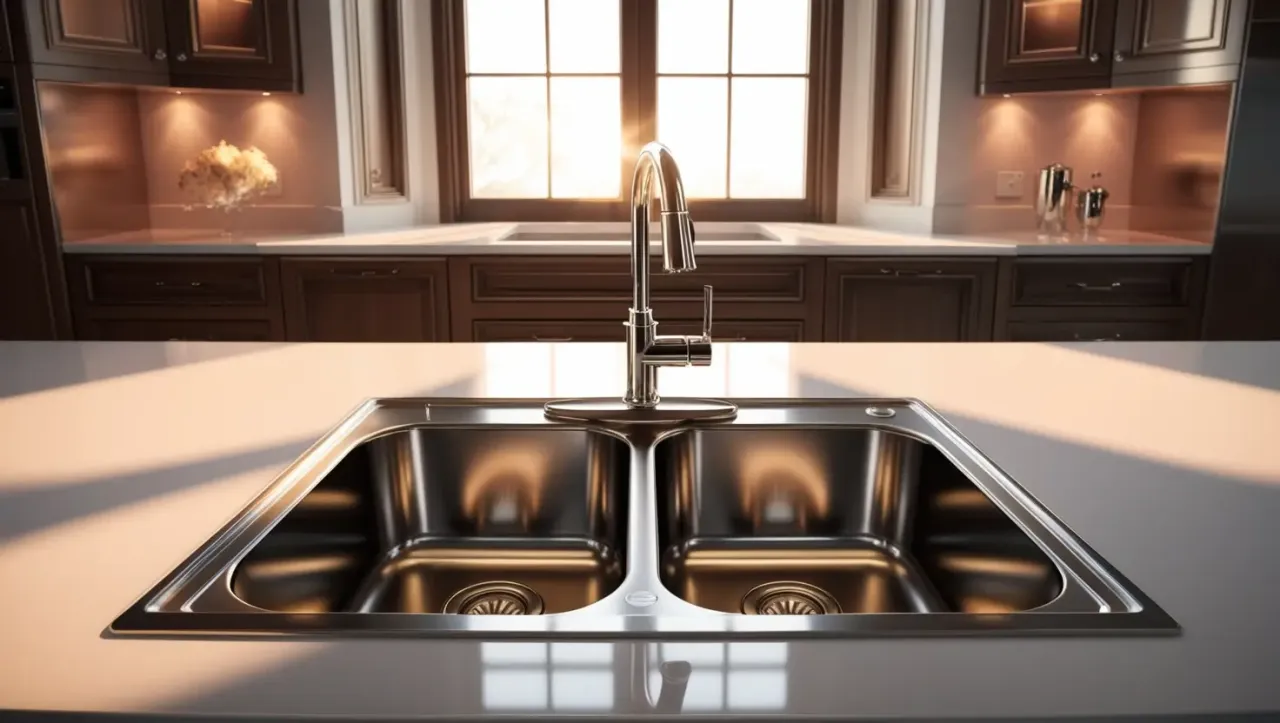
Double bowl sinks offer two separate basins, allowing for greater flexibility in kitchen tasks.
Pros:
- Allows for simultaneous tasks like washing and rinsing
- Can have equal-sized bowls or a larger/smaller configuration
- Offers more organization options
Cons:
- Individual bowls may be too small for large items
- Takes up more counter space than a single bowl sink
Triple Bowl: Ultimate Functionality
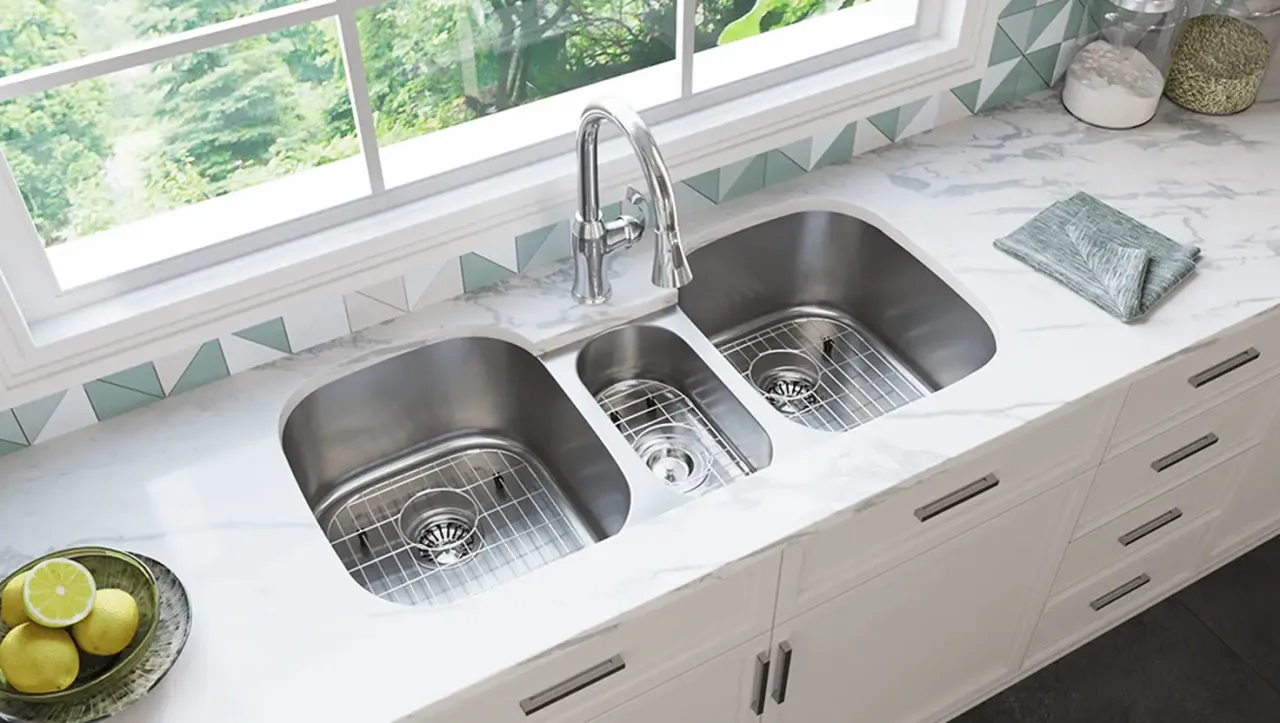
Triple bowl sinks provide maximum versatility with three separate basins.
Pros:
- Ideal for busy kitchens with multiple users
- Allows for multiple tasks simultaneously
- Often includes a smaller bowl for food prep or a garbage disposal
Cons:
- Requires significant counter space
- Individual bowls may be smaller than in single or double bowl configurations
- Can be more expensive than simpler options
Farmhouse (Apron-Front): A Statement Piece
Farmhouse sinks, with their distinctive exposed front panel, make a bold design statement.
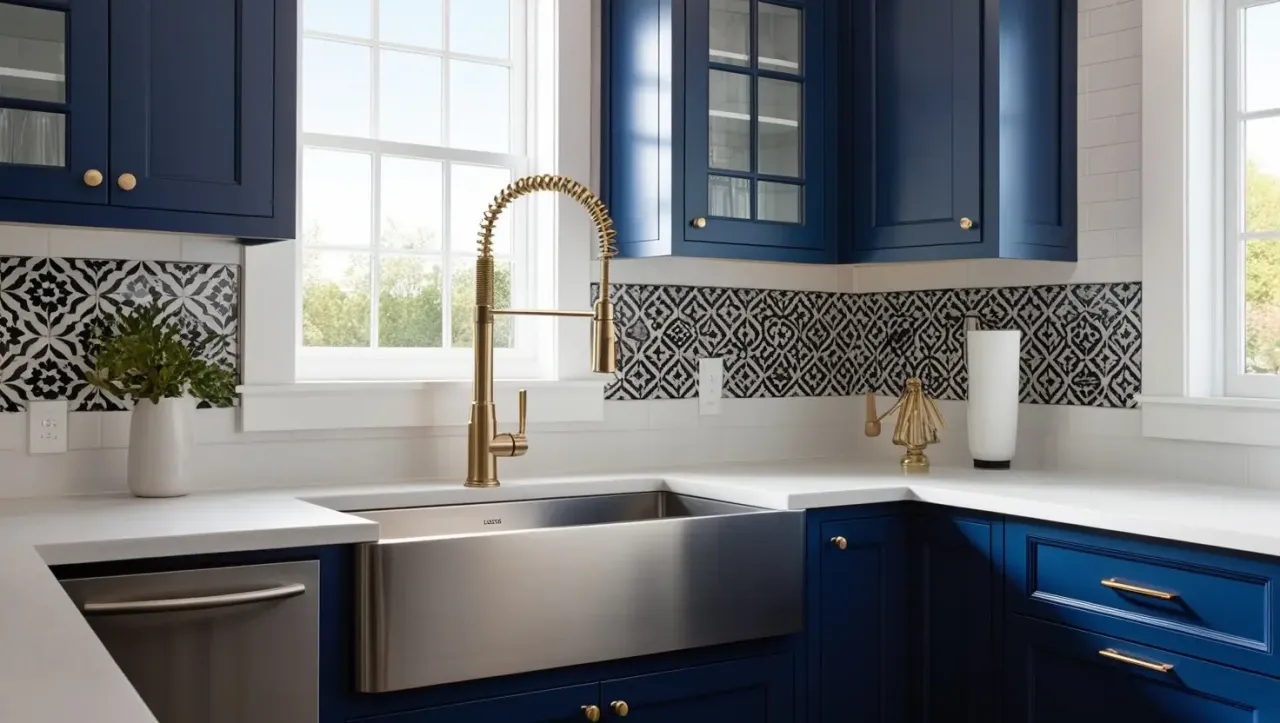
Pros:
- Offers a unique, eye-catching look
- Usually features a deep basin, great for washing large items
- Available in various materials, including stainless steel, fireclay, and copper
Cons:
- Requires special cabinetry and often professional installation
- Can be more expensive than traditional sink styles
- May not suit all kitchen designs
Bar/Prep Sink: The Perfect Addition
A smaller secondary sink for food preparation or entertaining.
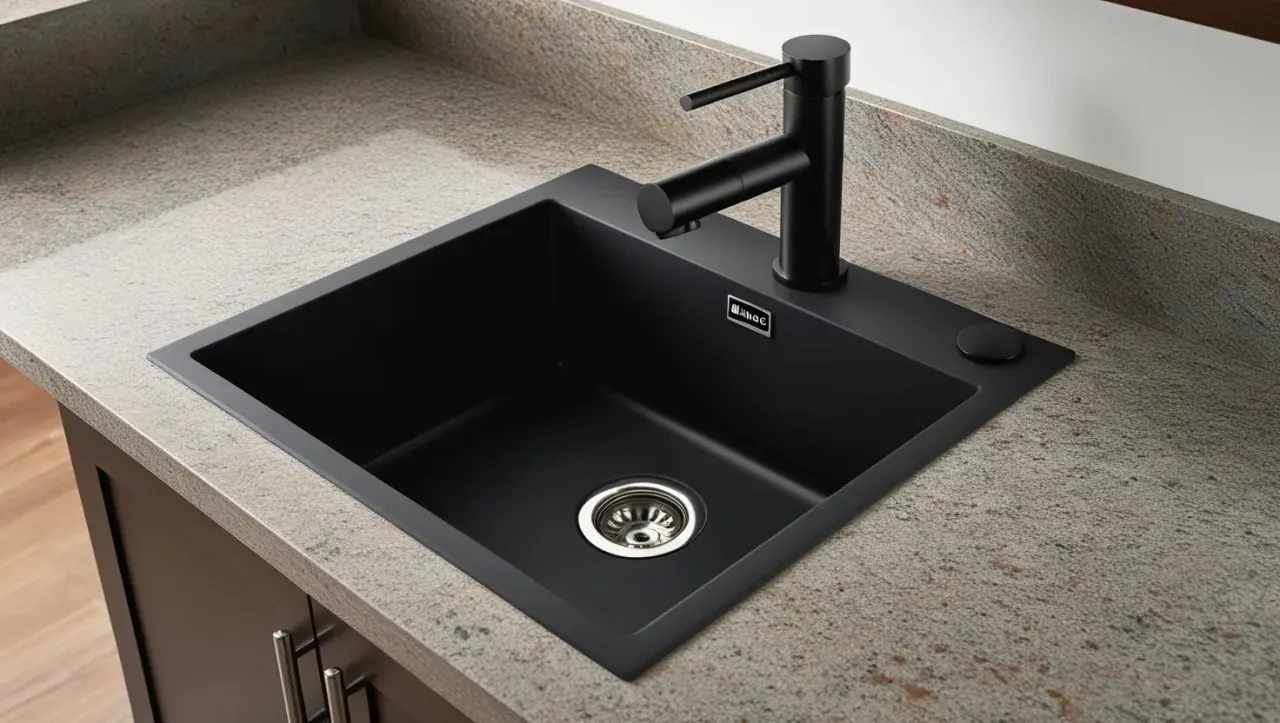
Pros:
- Adds convenience for food prep away from the main sink
- Great for entertaining or as a beverage station
- Can increase the efficiency of your kitchen workflow
Cons:
- Requires additional plumbing and counter space
- May be unnecessary in smaller kitchens
- Adds to the overall cost of your kitchen renovation
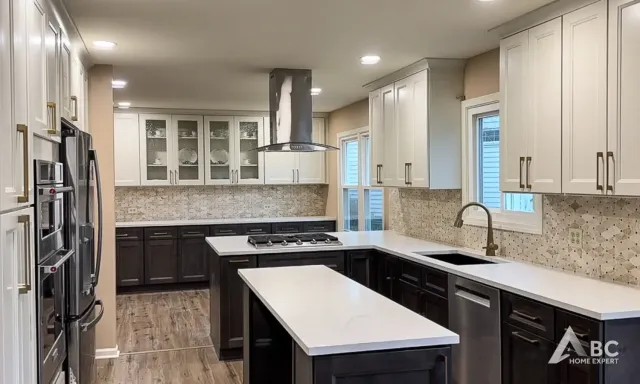
Planning a kitchen like this?
Get a free estimate and a 3D design of your new kitchen before any work begins.
Size and Configuration: Finding the Perfect Fit
When selecting the perfect kitchen sink, both size and configuration play pivotal roles in ensuring optimal functionality and aesthetic appeal. The process begins with a careful evaluation of your available counter space. A thorough measurement should account for the minimum required space between the sink and counter edge, typically 3 inches, along with additional space needed for faucets and fixtures. Don't forget to consider clearance requirements for cabinet doors and drawers.
Cabinet Size Considerations
Your base cabinet dimensions will largely dictate the maximum sink size you can accommodate. While standard base cabinets typically measure 36 inches wide, undermount sinks should be selected 2-3 inches smaller than the cabinet width. Top-mount sinks offer slightly more flexibility, allowing for installations up to the full cabinet width minus 1 inch for proper fitting.
Depth and Its Impact
Sink depth is another crucial factor that significantly affects both functionality and user comfort. Standard depths ranging from 8-10 inches work well for most kitchens, providing adequate space for typical tasks. Deeper sinks, measuring 10-12 inches or more, excel at concealing dirty dishes and accommodating large cookware, though they may require more bending over during use, which some users might find uncomfortable.
Usage Patterns and Household Needs
Your cooking and cleaning habits should heavily influence your sink selection. Consider how frequently you handle large pots and pans, whether you prefer dedicated food prep areas, and how often you entertain guests requiring additional sink space. The number of people in your household also impacts the ideal sink size and configuration. Larger families might benefit from more expansive single bowl sinks or multiple bowl configurations, possibly complemented by a separate prep sink.
Accessory Integration
The sink's compatibility with various accessories can enhance its versatility and functionality. Modern sinks can accommodate integrated cutting boards, colanders for streamlined food preparation, drying racks for efficient dish management, and protective sink grids that preserve the basin's finish. These accessories should be considered during the selection process to ensure your chosen sink model supports your desired additional features.
Installation Types: Choosing the Right Fit for Your Kitchen
Kitchen sinks feature different installation methods that affect both aesthetics and functionality. Sinks designed for specific installations offer unique benefits. Here are the main types to consider:
| Type | Advantages | Limitations |
|---|---|---|
| Top-Mount (Drop-In) Sinks designed for installation from above, with the rim sitting on top of the countertop. | The easiest installation option, perfect for DIY projects. Compatible with all countertop materials, making it versatile and cost-effective. Ideal for budget-conscious renovations. | The visible rim tends to accumulate dirt and complicates cleaning. Requires more counter space due to the rim design. Offers a more traditional rather than contemporary appearance. |
| Undermount Kitchen sinks feature installation from below the countertop, creating a seamless look. | Creates a modern, sophisticated look that enhances kitchen aesthetics. Simplifies countertop cleaning with no rim to trap debris. Provides maximum usable counter space. | Installation requires professional expertise. Limited to solid surface countertop materials, not suitable for laminate. Higher cost compared to top-mount options. |
| Flush-Mount Sinks designed to install level with the countertop, creating a smooth transition. | Delivers a distinctive, integrated appearance. Offers smooth transitions between surfaces. Enhanced cleaning convenience with no edges to catch debris. | Requires extremely precise installation measurements. Less common than other mounting styles. Installation costs tend to be higher due to complexity. |
| Integral Kitchen sinks feature seamless integration, made from the same material as the countertop. | Provides the most seamless, high-end appearance possible. Offers superior hygiene with no seams to harbor bacteria. Allows for complete customization to exact specifications. | Represents the highest cost option in most cases. Available only in specific countertop materials like solid surface and quartz. Replacement requires complete countertop removal. |
Additional Features: Enhancing Your Sink's Functionality
Modern kitchen sinks come with a variety of features that can significantly improve their functionality:
Sound-Absorbing Pads
These pads, often found on stainless steel sinks, help reduce noise from running water and clanging dishes.
Built-in Drainboards
Some sinks come with an integrated drainboard, providing a convenient space for drying dishes or food prep.
Customizable Accessories
Many sinks offer compatible accessories like cutting boards, colanders, and drying racks that fit perfectly over the sink, maximizing workspace.
Garbage Disposal Compatibility
If you plan to install a garbage disposal, ensure your chosen sink is compatible and has the necessary hole pre-drilled.
Smart Technology Integration
Some high-end sinks now offer smart features like touchless faucets, water usage tracking, and voice-activated controls.
Faucet Considerations: The Perfect Pairing for Your Sink
Choosing the right faucet is crucial for both the functionality and aesthetics of your kitchen sink. Here are some factors to consider:
Faucet Styles
- Single-handle: Easy to use, great for one-handed operation
- Double-handle: Offers more precise temperature control
- Pull-down/Pull-out: Provides extended reach and flexibility
- Touchless: Hygienic and convenient, activated by motion sensors
Finish
Choose a finish that complements your sink and overall kitchen design. Popular options include:
- Chrome
- Stainless steel
- Brushed nickel
- Oil-rubbed bronze
- Matte black
Spout Height and Reach
Consider the size of your sink and the types of items you'll be washing. A taller spout with good reach can make handling large pots easier.
Number of Holes
Ensure your sink has the appropriate number of holes for your chosen faucet and any additional features like soap dispensers or filtered water taps.
Maintenance and Care: Keeping Your Sink in Top Condition
Proper maintenance will ensure your sink looks great and functions well for years to come:
Daily Cleaning
- Rinse the sink after each use
- Wipe down with a soft cloth or sponge and mild dish soap
- Dry with a clean towel to prevent water spots
Material-Specific Care
- Stainless Steel: Use a non-abrasive cleaner and avoid harsh chemicals
- Granite Composite: Clean with warm water and mild soap, avoid acidic cleaners
- Porcelain: Use non-abrasive cleaners to avoid scratching the surface
- Cast Iron: Clean with mild soap and avoid abrasive materials
- Copper: Use specialized copper cleaners to maintain its patina
Preventing Damage
- Use a sink grid to protect the bottom from scratches
- Avoid leaving standing water for long periods
- Don't use the sink as a cutting board
- Be cautious with heavy pots and pans to avoid chips or dents
Budgeting for Your Kitchen Sink: Balancing Cost and Quality
When budgeting for your new kitchen sink, consider these factors:
Sink Cost
- Basic stainless steel sinks are the most affordable
- Mid-range sinks (granite composite, higher-end stainless steel) cost more
- High-end sinks (copper, custom designs) cost the most
Installation Costs
- DIY installation can save money but may void warranties
- The cost of professional installation depends on its complexity
- Custom installations or modifications to cabinetry can increase costs significantly
Additional Expenses
- Faucets range from basic to premium models
- A garbage disposal adds to the cost
- Accessories like sink grids, cutting boards, and soap dispensers add to the total
Remember, investing in a quality sink can increase your home's value and provide years of reliable use.
Conclusion: Making Your Perfect Sink Selection
Choosing the right kitchen sink involves balancing functionality, aesthetics, and budget. At ABC Home Expert, we're committed to helping you find the perfect sink for your kitchen remodel. Our services go beyond just sink installation – we offer comprehensive kitchen renovation solutions including:
- Custom and standard kitchen cabinet installation
- Countertop sales and installation in various materials
- A wide range of faucet options and installation services
- Flooring solutions to complement your new sink and overall kitchen design
- Expert advice on sink selection and kitchen layout optimization
To ensure you make the best choice for your home, we offer free estimates and 3D design services. Our team of experts will work with you to create a kitchen that not only meets your practical needs but also reflects your personal style.